The Future of Camera Profiling: Unifying 5 Sony Bodies at the FIFA World Cup with Cobalt Spectre
Covering an event on the scale of the FIFA World Cup is a fast-paced, high-pressure assignment where there is zero margin for error. During my recent coverage of three World Cup matches at BC Place in Vancouver, speed, precision, and image consistency were paramount.
To capture every angle of the pitch—from lightning-fast counterattacks to emotional fan reactions in the stands—I operated a multi-body setup featuring five different Sony cameras:
• Sony A1
• Sony A1 II
• Sony A9 III
• Sony A7 V
• Sony A7CR
While having five dedicated bodies fitted with various prime and telephoto lenses allowed me to seamlessly switch focal lengths without missing a second of action, multi-camera setups historically come with a major post-processing headache: sensor color variation.
The Challenge: The Multi-Sensor Color Gap
Even within the same brand ecosystem, different camera sensors process light and color differently.
• High-resolution stacked CMOS sensors (like those in the A1 and A1 II) render subtle highlight tones differently than compactness-oriented sensors (like the A7CR).
• Global shutter sensors (like the groundbreaking A9 III) feature a unique pixel architecture that handles light readout differently from conventional rolling shutter sensors.
• Under mixed stadium lighting, these subtle hardware differences mean that the turf greens, team kit colors, and skin tones captured on Camera A don't automatically match Camera B.
When you are editing hundreds of images under strict live news deadline pressures, manually matching colors across five camera models is a massive bottleneck.
The Solution: Seamless Color Alignment with Cobalt Spectre
This is where the latest Cobalt Spectre profiles completely transform the workflow.
Cobalt Spectre acts as a universal color normalization engine. By applying the Spectre profile across my entire Lightroom catalog, it bypasses standard manufacturer camera profiles and standardizes color science at the base level. Regardless of which sensor captured the frame, the underlying color response becomes identical.
Key Results on the Pitch:
1. Unified Kit Colors: The deep crimson red of Turkey's kits, the vivid gold and green of Australia's uniforms, and the stark white/black of Canada's kits remained perfectly uniform across all five camera bodies.
2. Consistent Pitch Greens: Grass tones under stadium floodlights can easily shift toward unnatural cyan or yellow tint across different sensors. Cobalt Spectre maintained a rich, natural green base across every body.
3. Accurate Skin Tones: From high-contrast action portraits to backlit fan shots, skin tones rendered consistently without requiring individual body-by-body adjustments.
Image Breakdown & Metadata Proof
Here is a look at frames captured across the tournament, processed with Cobalt Spectre:
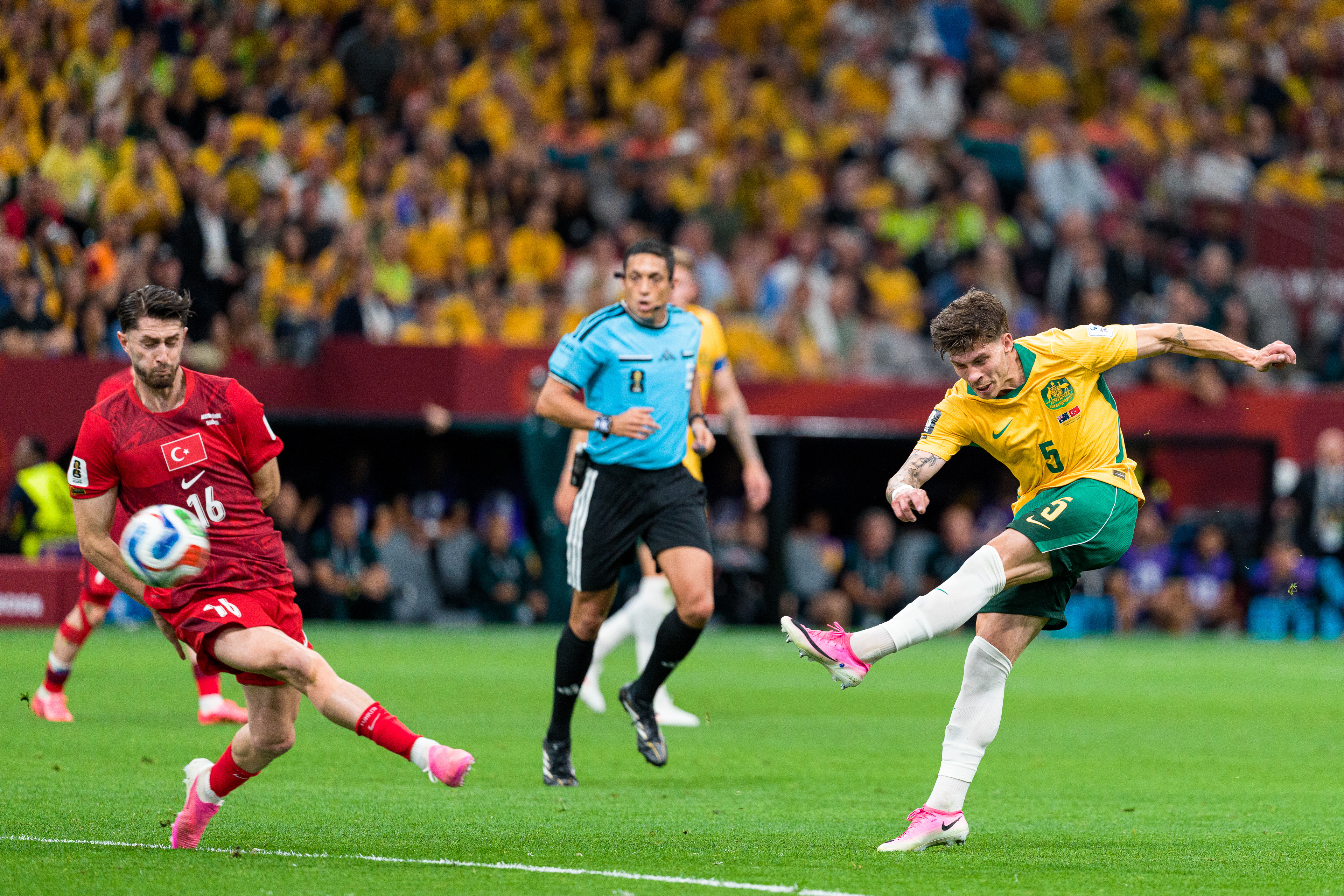
Frame 1: High-Speed Action Matchup
Camera: Sony A1
Lens: FE 300mm F2.8 GM OSS
Settings: ISO 1600 | 1/3200s | f/2.8
Color Rendering: Notice how the vibrant yellow and deep green of the Australian kit pop cleanly without blowing out, while the turf green remains balanced and natural under heavy stadium lighting.
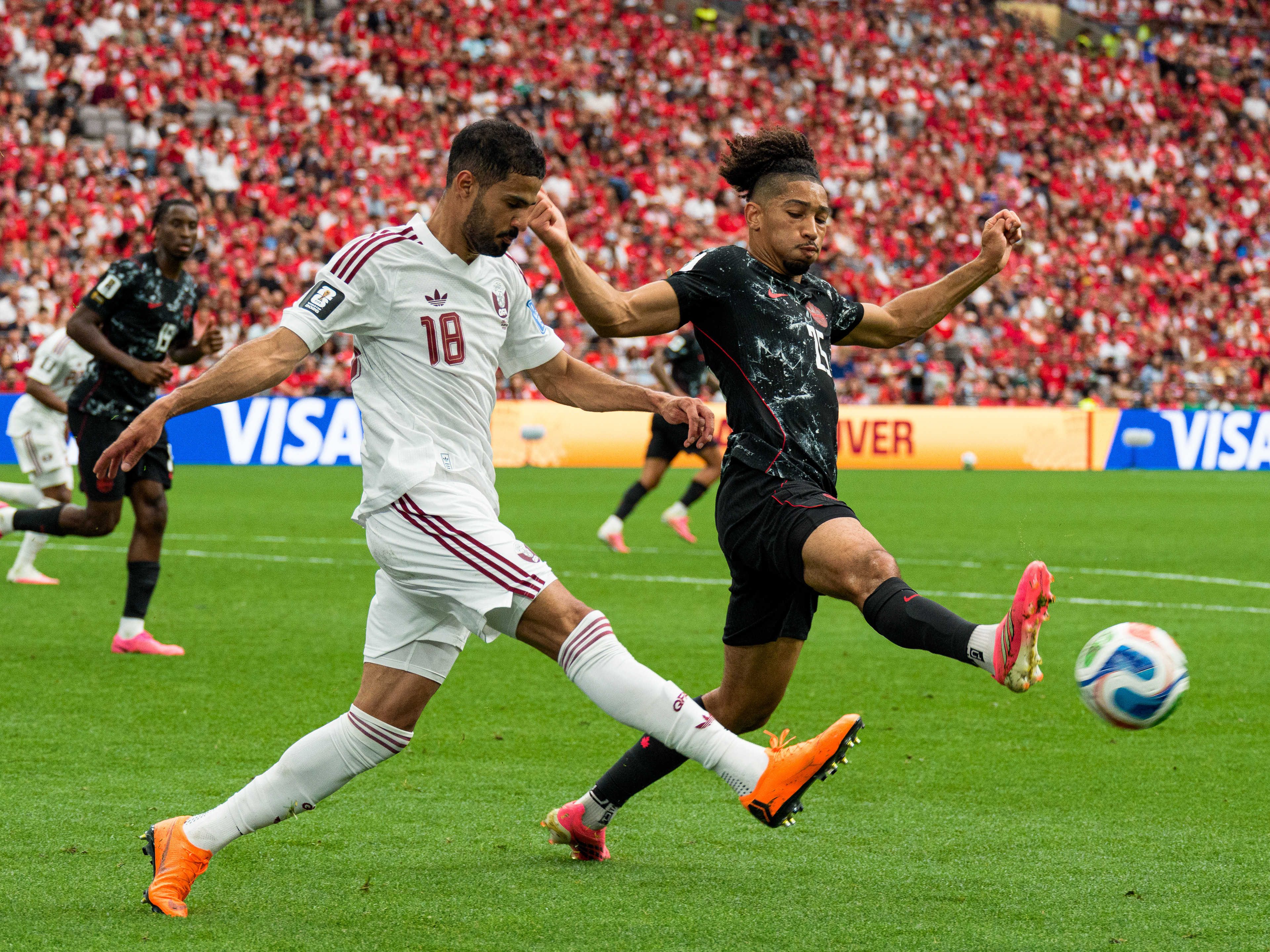
Frame 2: Aerial Challenge
Camera Body: Sony A1 II
Lens: Sony FE 100-400mm f/4.5-5.6 GM OSS
Settings: ISO 2000 | 1/1000s | f/4.5 | 100mm
Color Rendering: Framed wider at 100mm to capture the mid-air challenge against the crowd, Spectre keeps the stark white away kits, deep red stadium background, and skin tones rendered naturally without highlight clipping or color casting.
Frame 3: High-Point Aerial Header
Camera Body: Sony A7 V
Lens: Sony FE 300mm f/2.8 GM OSS
Settings: ISO 1600 | 1/1000s | f/2.8
Color Rendering: Capturing mid-air collision action on the Sony A7 V, Cobalt Spectre maintains identical color response to the flagship bodies—rendering the golden-yellow Australian kit and dark red background with total saturation accuracy and smooth highlight transitions.

Camera Body: Sony A7CR
Lens: Sony FE16-35mm GMII Lens
Settings: ISO 1600 | 1/1000s | f/4.0
Color Rendering: Capturing wide crowd energy on the compact A7CR, Cobalt Spectre maintains full color fidelity across the bright yellow and green Australian fan apparel while preserving natural, realistic skin tones.

Camera Body: Sony A9 III (Global Shutter)
Lens: Sony FE 300mm f/2.8 GM OSS + 1.4X Teleconverter
Profile Used: Cobalt Standard (Pre-release Spectre workflow)
Settings: ISO 1600 | 1/4000s | f/2.8
Color Rendering: Because Cobalt Spectre is not yet released for the Sony A9 III, this shot was edited using Cobalt Standard. Standard achieves clean, accurate color correction by normalizing the base raw profile of the global shutter sensor, ensuring the vibrant primary yellow of Colombia's kit and the deep red of Switzerland's uniform render naturally under full stadium sun.
Understanding the Difference: Cobalt Standard vs. Cobalt Spectre
Working with a brand-new body like the Sony A9 III provides an excellent real-world look at how Cobalt’s profile lineup functions:
Cobalt Standard:
Purpose: Bypasses Adobe's default camera profile to create an accurate, neutral, and linear baseline specific to that exact camera model.
Workflow Role: Corrects color science quirks unique to a single sensor (such as the A9 III's global shutter sensor architecture), establishing a clean raw starting point for manual grading or film emulations.
Cobalt Spectre:
Purpose: Acts as a advanced cross-camera spectral matching engine.
Workflow Role: Instead of just correcting one sensor, Spectre unifies the color response across multiple different camera bodies. It aligns the spectral rendering of your entire gear bag (A1, A1 II, A7 V, A7CR, A9 III) so that every shot shares identical color values out of the box.
Using Cobalt Standard on the A9 III delivers precise color balance for that specific body. Once the Cobalt Spectre profile for the A9 III is released, it will seamlessly bridge the remaining gap—allowing the A9 III's global shutter frames to automatically match the rest of the Sony fleet without any extra adjustment.